
When we think about eggs, most of us picture happy hens on farms. The truth is that most of the eggs sold in the market come from hens kept captive in ‘battery cages’ for their entire short life and when they are no longer capable of producing a good number of eggs, farmers sell them to slaughter. Few of us know about the cruelty in these egg farms nor do we stop to wonder where the hens that produce so many eggs come from, who breeds them, or how their lives have been shaped long before they ever lay their first egg.
Who Decides Which Hens Lay the Eggs We Eat?
The truth is that the modern egg industry is built on a highly controlled global breeding system. Just as a handful of corporations dominate the genetics of chickens raised for meat, a small number of international breeding companies control the genetics of the hens used for egg production around the world, including in India.
The Hidden Global Network Behind Every Egg
Commercial layer hens are not ordinary village chickens. They are the result of decades of selective breeding aimed at maximizing egg production. The hens used by India’s poultry industry originate from a small number of specialized breeding companies located primarily in Europe and North America.
Among the most influential are:
- Hy-Line International (USA), one of the world’s largest layer genetics companies and the source of India’s popular Hy-Line W-80 and Hy-Line Brown hens.
- LOHMANN Breeders (Germany), which supplies the pure-line genetics behind the LOHMANN LSL strains used in India.
- Hendrix Genetics (Netherlands), which owns globally recognized layer brands such as Bovans, Dekalb, ISA, and Shaver.
- Novogen (France), a major breeding company developing “high-efficiency” white and brown egg-laying hens.
These companies maintain the elite breeding lines from which billions of hens worldwide ultimately descend. And the number of eggs these companies breed layer hens to produce is inhumanely staggering.
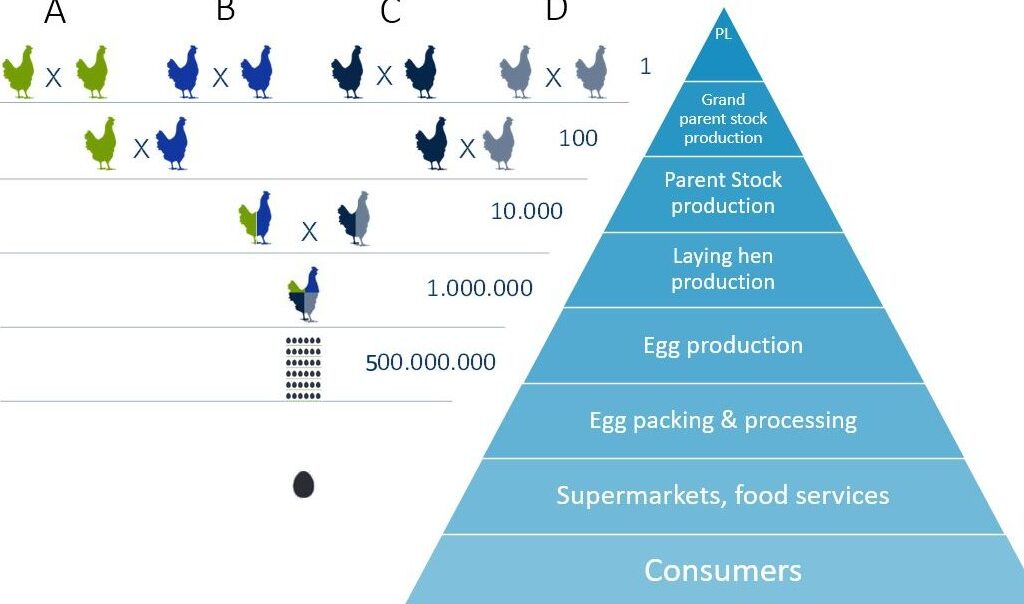
Artificial Insemination and the Breeding Process
These commercial breeding companies use “artificial insemination” to produce the each generation of layer hens. In these systems, workers collect semen from selected male birds through repeated manual handling and restraint of the sensitive male genital organ. This is a distressing and painful process for the roosters.
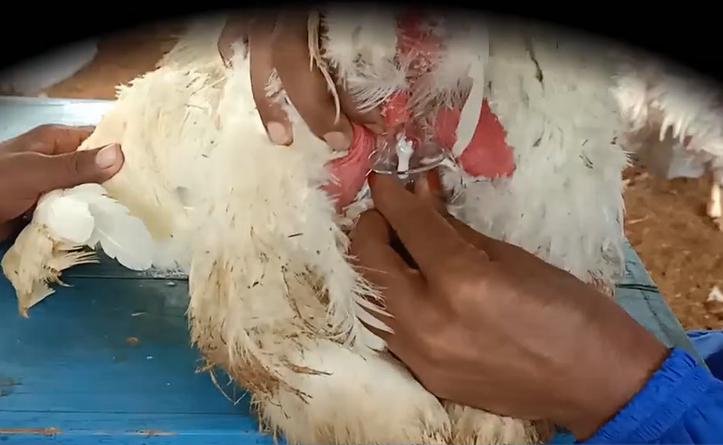
The workers then restrain the female breeder hens physically to insert the semen into their reproductive tract, which is again a very stressful and distressing experience for the hens.
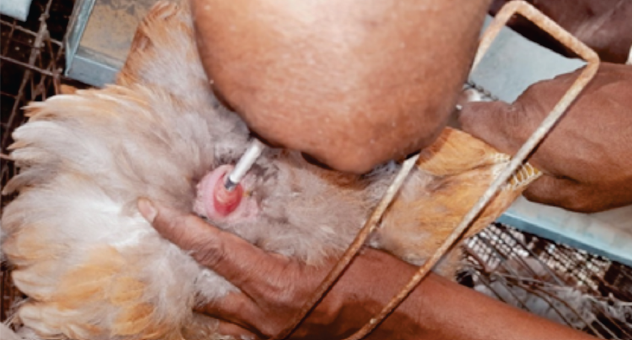
The procedure is designed to maximize fertility and maintain carefully controlled genetic lines; it prioritizes production goals over the birds’ natural reproductive behaviours. The process serves as a reminder that in industrial breeding systems, companies treat hens not as sentient individuals with their own interests, but simply as biological units whose bodies are managed to produce the next generation of profitable egg-laying birds.
The Indian Companies That Supply Layer Chicks
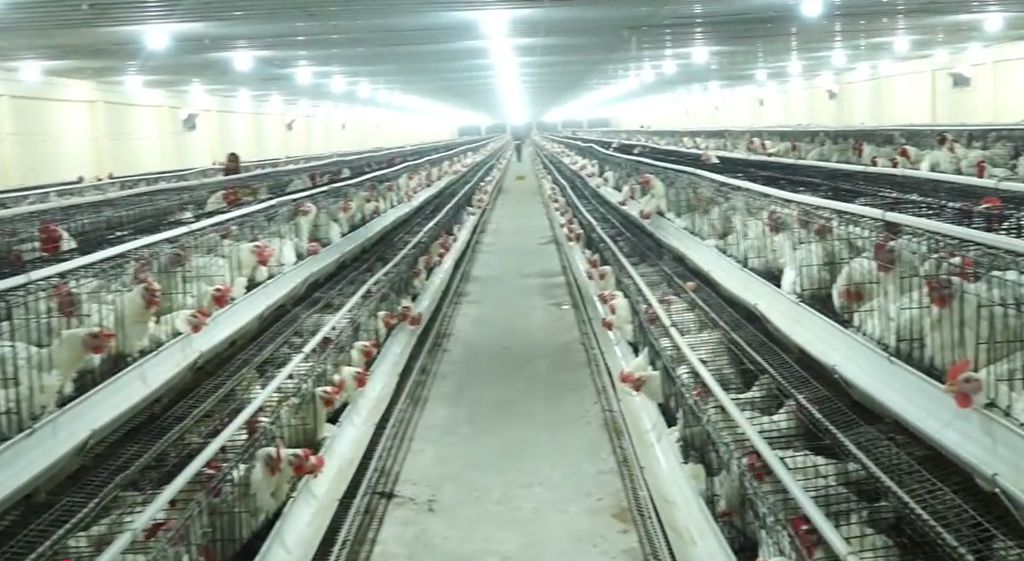
Large hatcheries and poultry corporations import the “genetic stock” from these international breeding companies into India. These birds are kept in huge sheds in the thousands with one male for every ten female hens.
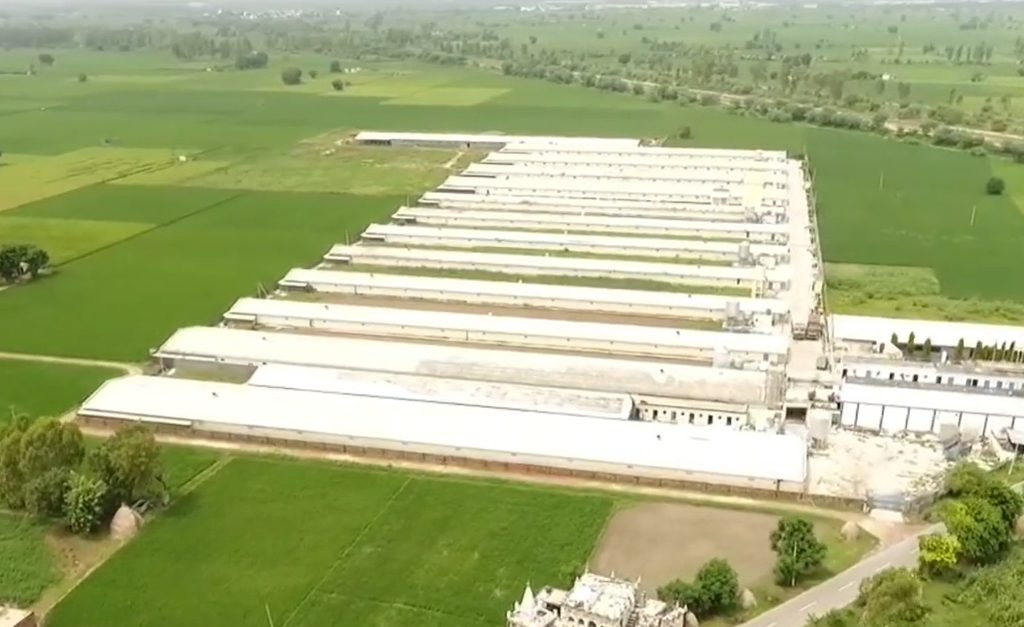
The major companies in India that import them are:
Srinivasa Farms
One of India’s main layer producers and the sole franchise distributor of Hy-Line genetics in the country. They market breeds such as Hy-Line W-80 India and Hy-Line Brown, specially selected for commercial egg production under Indian conditions.
JK Breeders
A well known poultry company that works with LOHMANN Breeders of Germany to supply layer chicks based on the LOHMANN LSL Ultra Lite strain.
Skylark Hatcheries
One of India’s largest integrated poultry companies, supplying commercial layer chicks and fertile eggs throughout the country while utilizing imported global genetics.
Sneha Group
A fully integrated poultry enterprise that manages breeder farms, hatcheries, feed production, and layer operations across southern and central India.
Venkateshwara Hatcheries (Venky’s)
Venky’s is one of the first companies in India to maintain parent and grandparent breeding stock and to start the modern poultry “breeding industry” in India.
Breeding Birds for Productivity
The goal of commercial breeding programs is not to create birds that can live naturally or raise families naturally. Instead, breeding focuses on traits that increase productivity and profitability.
Companies selectively breed “modern” layer hens to lay far more eggs than their wild ancestors ever would. While a jungle fowl, the ancestor of today’s chicken, lays a small limited number of eggs each year, anywhere from 15 to 30 eggs a year, companies breed layer hens to produce an unnaturally large number of eggs annually… around 300 or more eggs a year.
Companies manage every aspect of their biology “carefully” to maximize output. They design the feed, lighting schedules, breeding programs, and genetics all around a single objective: producing as many eggs as possible at the lowest possible cost. The life of these sentient birds is of absolutely no consequence.
The Sentient Birds Behind the Numbers
When we look at industry statistics, it is easy to forget that these are living beings.
Every hen the egg industry uses is an individual with her own instincts, desires, and capacity to suffer. Like all birds, hens naturally seek companionship, explore their surroundings, dust-bathe, build nests, and care for their young.
Yet companies that have created this “industrial” system view them primarily through the lens of production and “measure” them by the number of eggs they lay, the feed they consume, and the profit they generate.
The sophisticated global breeding network behind the egg industry demonstrates just how much effort, science, and investment go into increasing production. But it also raises an important question:
If so much intelligence and innovation can be devoted to maximizing profits from animals, can we not also use our intelligence to stop the suffering imposed on them?
A More Compassionate Choice
Understanding where our food comes from empowers us to make informed decisions. Every plant-based meal is an opportunity to align our choices with the values of compassion, nonviolence, and respect for all living beings.
- Discover delicious traditional Indian recipes: Explore hundreds of wholesome plant-based dishes at Indian Vegan Cookbook.
- Make breakfast egg-free: Enjoy nourishing Indian favourites such as poha, upma, idli, dosa, medu wada, uttapam, sambhar, and chutney. These dishes are naturally based on grains and legumes and can easily be made whole-food plant-based.
- Replace eggs in baking: Use mashed banana, applesauce, or a flaxseed “egg” (1 tbsp flaxseed powder + 3 tbsp water) for each egg.
- Choose progress over perfection: Even one plant-based meal can make a difference for animals, the environment, and your health.